Modi Calls for Global Governance Reform as BRICS Adopts New Delhi Declaration
09/15/2026 / By Edison Reed
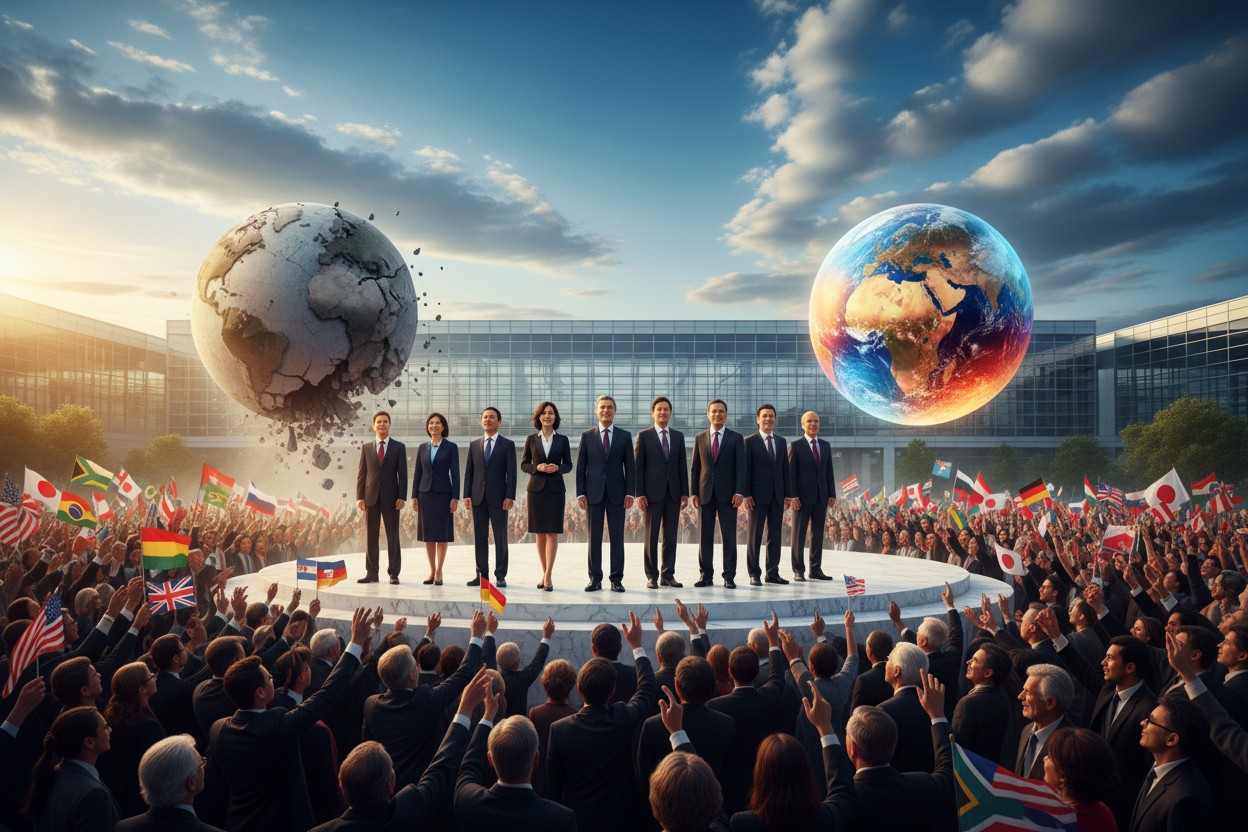
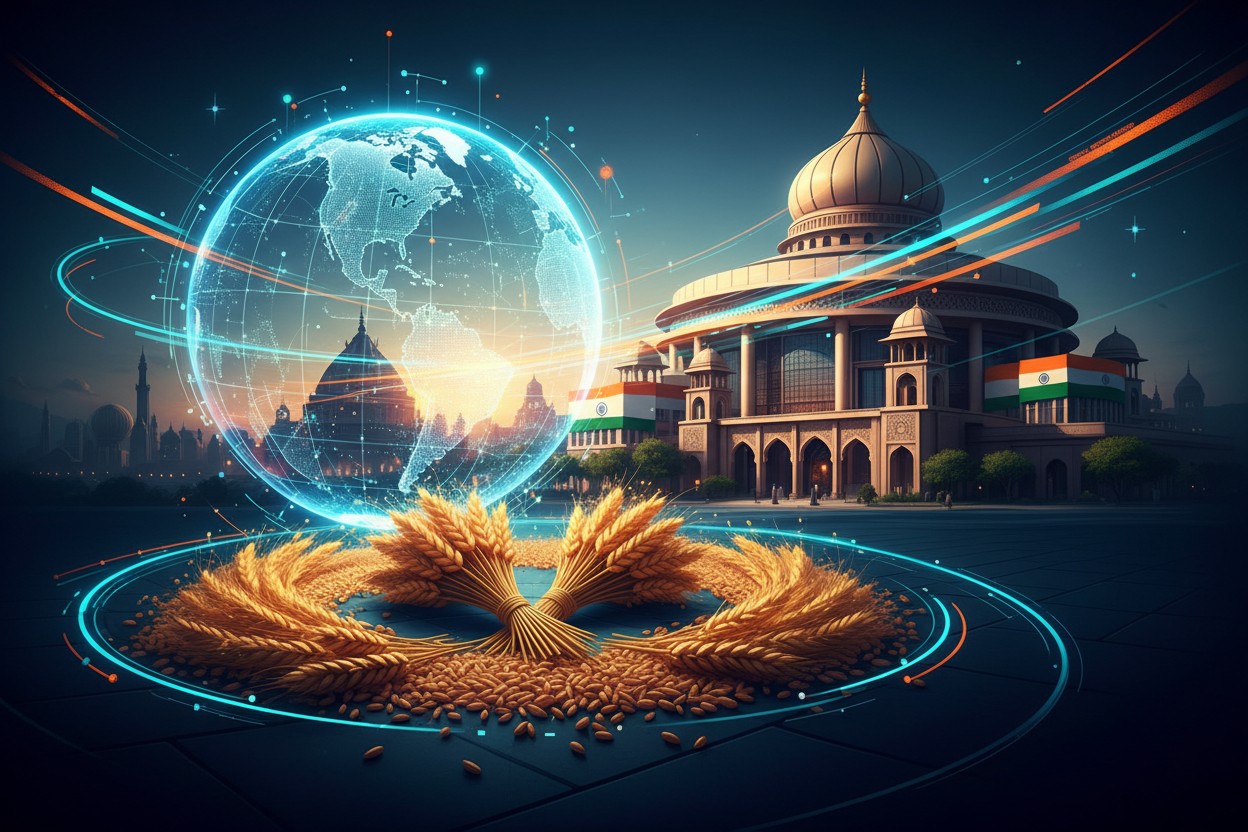
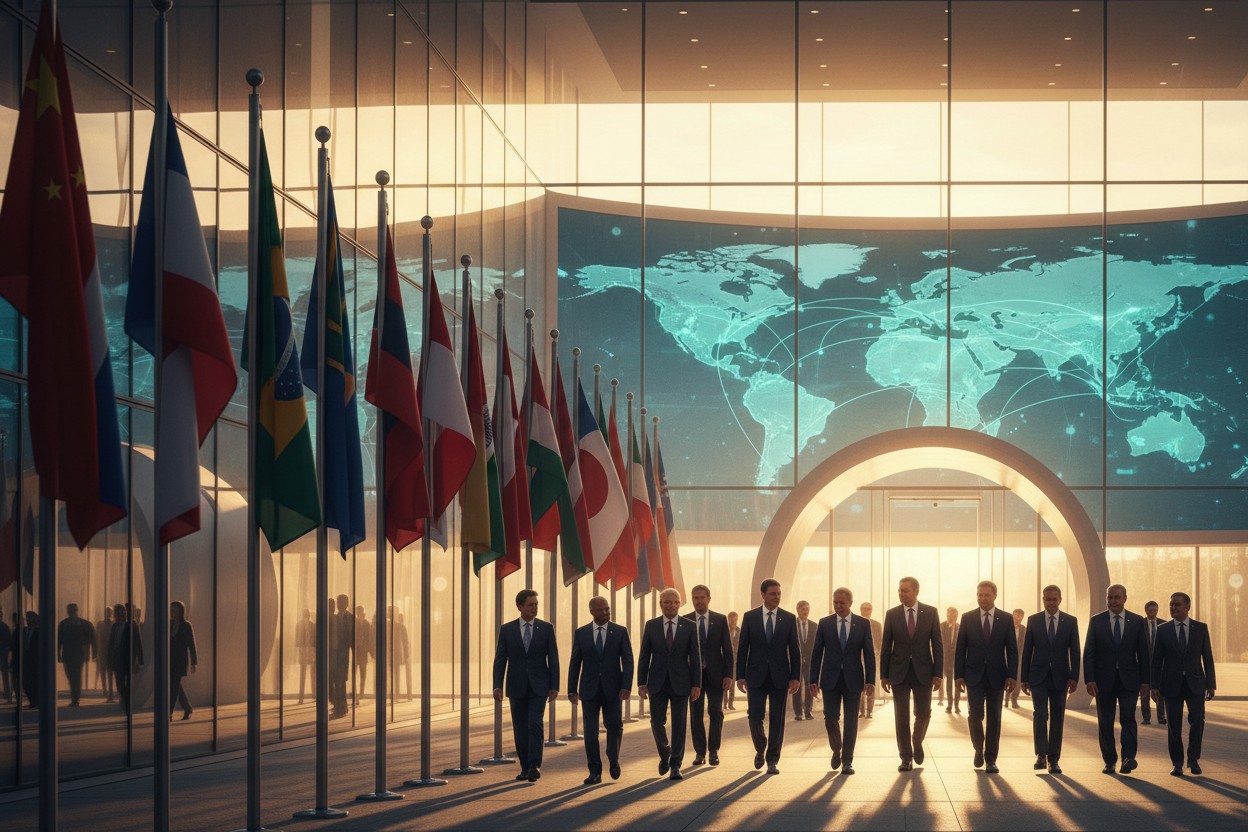
Indian Prime Minister Narendra Modi said the changing world “cannot be steered by outdated institutions” on Saturday, according to remarks delivered at the 18th BRICS summit in New Delhi. BRICS leaders adopted the New Delhi Declaration during the two-day gathering, which ran September 12-13 and was hosted at the Bharat Mandapam convention center, the report stated [1][2].
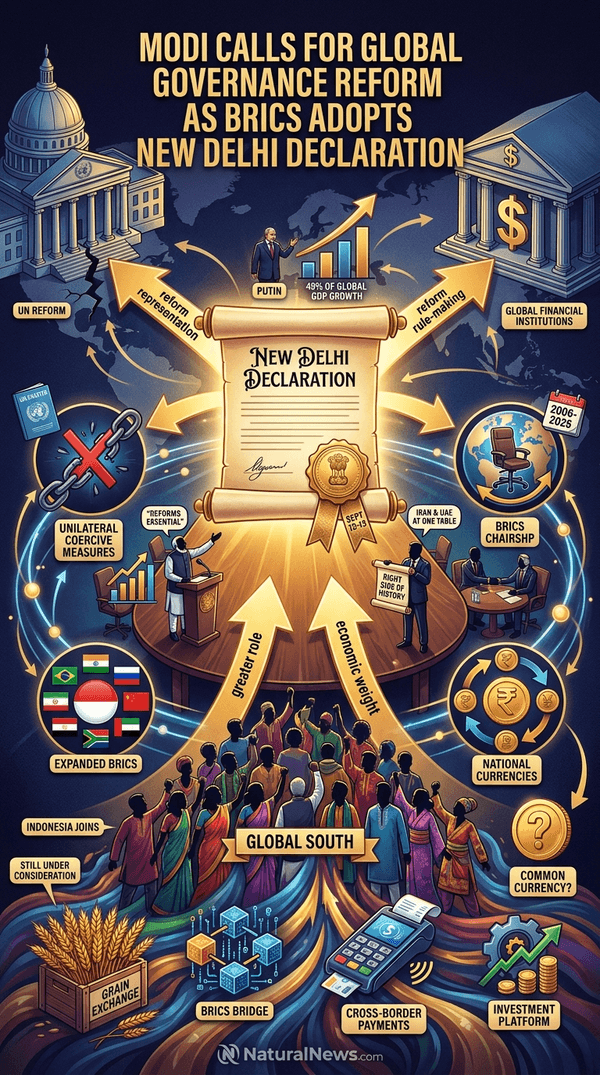
Modi called for reforms in representation, responsiveness and rule-making, and for a greater role for the Global South in international decision-making, according to his remarks [1]. The declaration backs reform of the UN and global financial institutions and condemns unilateral coercive measures that are contrary to international law, according to the document cited in coverage [2].
The summit marks 20 years since the first BRIC foreign ministers’ meeting in September 2006 on the sidelines of the UN General Assembly in New York, according to RT [3]. India holds the rotating BRICS chairship this year and is hosting the leaders’ summit, Russian Ambassador to India Denis Alipov said ahead of the event [4].
New Delhi Declaration Backs UN, Financial Institution Reforms
The New Delhi Declaration supports giving developing countries greater representation in global institutions and reaffirms the bloc’s opposition to unilateral coercive measures that run counter to the UN Charter, according to the document cited in coverage [2]. Modi said “Reforms are essential in representation, responsiveness and rule-making,” according to his remarks at the leaders’ session [1]. Indian MP Sujeet Kumar told RT that BRICS seeks greater representation for developing nations and argues that the existing governance architecture no longer reflects economic and demographic realities [1].
Kumar said BRICS is “non-West, but it is not anti-West,” adding that Washington’s perception of the group is “its problem, not the problem of BRICS” [1]. The lawmaker described the group as “a platform for the growth, development, prosperity of the Global South” [1]. Chinese President Xi Jinping urged member nations to stand on the “right side of history” and take a leading role in promoting peace, according to China’s state media, as cited in summit coverage [5].
The declaration also follows a pattern of BRICS positioning itself as a counterweight to Western financial and political hegemony. A 2025 assessment published by the activist outlet Activist Post stated that the world is witnessing a power shift as the alliance emerges as a counterweight to Western institutions [6]. The New Delhi document builds on positions the bloc has taken at prior summits in Kazan and Rio de Janeiro, where leaders called for ceasefires and criticized unilateral sanctions [7][8].
Putin Describes BRICS as Emerging Center of Global Governance
Russian President Vladimir Putin described BRICS as an emerging center of global governance, saying global politics, security and the economy increasingly depend on the group’s joint decisions, according to the report [1]. Speaking at the BRICS Business Forum on Friday, Putin said the group’s work “is not directed against anyone” and is focused on the development and prosperity of its members [1][9]. On the second day of the summit, Putin told the BRICS Outreach/BRICS+ session that international interest in the group “continues to grow” and that BRICS accounts for 49 percent of global GDP growth, according to RT coverage [10].
Kumar told RT that BRICS can withstand external pressure and continue to expand because it offers Global South countries an alternative platform based on mutual respect [1]. The report stated that BRICS has expanded into an economic heavyweight with growing global influence since its founding [3]. The bloc has admitted new full members in recent years, including Indonesia, whose accession was finalized under President Prabowo Subianto and framed as a push to strengthen ties with developing economies and advocate for global governance reforms [11].
Putin has consistently framed the group as a vehicle for reforming global financial institutions to ensure openness and equity, according to prior NaturalNews coverage [12]. The Russian president has also highlighted the strategic partnership between Russia and China within multilateral frameworks including the UN, G20 and SCO [12]. Analysts cited in Russia in a Changing World by Glenn Diesen and Alexander Lukin argued that US use of financial predominance as a political tool of foreign policy stimulated Russia to strengthen its security by weakening the infrastructure of US financial hegemony [13].
Leaders Hold Sideline Meetings on Summit Margins
Modi and Chinese President Xi Jinping met on the sidelines and discussed the “full range” of China-India relations, Modi wrote on X, according to the report [1]. The Indian side conveyed best wishes for China’s upcoming rotating BRICS presidency, which Beijing is set to hold next year, Modi said on X [1]. No formal meeting between Xi and Putin was scheduled, though an informal conversation on the sidelines was possible, the report stated [1][3].
Modi also met Ethiopian Prime Minister Abiy Ahmed Ali and Abu Dhabi Crown Prince Khaled bin Mohamed bin Zayed Al Nahyan, with talks covering defense, investment, critical minerals, clean energy, healthcare and capacity building, according to Modi’s posts on X [1]. Iranian President Masoud Pezeshkian held separate meetings with the Ethiopian and Malaysian prime ministers, according to the report [1]. Pezeshkian arrived in New Delhi on Friday and met with Modi hours later, ahead of Saturday’s main summit program [1].
The Kremlin’s investment envoy, Kirill Dmitriev, shared a photo of Putin, Modi and Xi on social media with the caption, “The Leaders are only missing their friend, President Trump, to complete the circle” [1]. Brazilian journalist Pepe Escobar told RT that the summit was marked by the fact that Iran and the UAE, which he described as de facto at war, sat at one table and agreed on the joint declaration [1]. India’s diplomacy-first posture across the Ukraine and Middle East conflicts has been a recurring theme of its BRICS chairship, according to RT analysis [14].
BRICS Members Discuss National Currencies, Common Currency
Iranian Foreign Minister Abbas Araghchi said on the sidelines that BRICS members agree on strengthening national currencies and expanding their use in mutual trade, according to the report [1]. Araghchi said “there are different opinions” within BRICS and that a common BRICS currency “is still under consideration,” according to his remarks to reporters [1]. “All members of the group believe that national currencies should be strengthened and trade between member states should be conducted in national currencies,” he said [1].
The report stated that BRICS members remain divided over a single currency while seeking cheaper payment mechanisms to side-step the US dollar [1]. Prior NaturalNews coverage of the bloc stated that BRICS had firmly dismissed speculation about creating a common currency to rival the US dollar [15][15]. Kremlin spokesman Dmitry Peskov was cited in that coverage as rejecting the common-currency idea [15].
Russia’s Ambassador to India, Denis Alipov, said India has advanced key BRICS initiatives backed by Russia, including cross-border payments, a proposed grain exchange, and a new investment platform, ahead of the leaders’ summit [4]. Reporting on BRICS payment initiatives has described plans to build new financial infrastructure intended to reduce reliance on Western institutions. One earlier NaturalNews article cited officials saying the bloc is forced to look for alternatives if it is not given the chance to use the dollar [16]. Another prior report described blockchain technology as a likely foundation for a “BRICS Bridge” alternative to the dollar-backed SWIFT settlement system [17].
Summit Continues Sunday After Gala Dinner
The first day concluded with a gala dinner at the Bharat Mandapam exhibition hall in New Delhi, with BRICS leaders in attendance, according to RT footage [1]. Malaysian Prime Minister Anwar Ibrahim sang a Kishore Kumar song at the dinner, according to the report [1]. RT also launched an interactive project called The Moscow-Delhi Window, with identical large-screen installations near the Kremlin in Moscow and the Red Fort in Delhi allowing visitors to see and interact in real time, the report stated [1].
The 18th BRICS Summit runs through Sunday, and further meetings are expected, the report stated [1]. Putin, Modi and Xi joined an expanded BRICS+ session on the final day, with discussions focused on resilience, innovation, cooperation and inclusive global growth, according to the report [18]. India’s Commerce and Industry Minister Piyush Goyal said an India-Russia priority investment tracking mechanism is monitoring 40 projects across advanced manufacturing, energy, mining, railways and emerging technology as the two countries pursue a $50 billion investment target, according to the report [19].
References
- “BRICS Summit: ‘Changing world cannot be steered by outdated institutions’ – Modi: As it happened”. September 12, 2026.
- “BRICS New Delhi declaration rejects sanctions, nuclear threats and terrorism”. September 12, 2026.
- “20 years of BRICS: From Wall Street acronym to global power center”. September 12, 2026.
- “India advanced Russia-backed BRICS initiatives – Russian envoy”. September 11, 2026.
- ZeroHedge. “President Xi Urges BRICS To Stand On ‘Right Side Of History’, Calls For Gulf Peace”. September 12, 2026.
- Activist Post. “BRICS Emerging as Reality in the New World Order”. August 5, 2026.
- Ramon Tomey. “BRICS nations call for ceasefire in Gaza and recognition of Palestinian statehood”. NaturalNews.com. October 27, 2024.
- Lance D. Johnson. “BRICS declares stealth economic war on the West, rebuking the collapsing dollar at a major summit in Rio”. NaturalNews.com. July 13, 2025.
- “BRICS ‘not against anyone,’ Putin says as summit opens”. September 12, 2026.
- “BRICS driving global economic growth – Putin: As it happened”. September 13, 2026.
- Arsenio Toledo. “Indonesia becomes BRICS bloc’s newest full member”. NaturalNews.com. January 8, 2025.
- NaturalNews.com. “Putin champions BRICS as a pillar of global realignment emphasizes new financial system for the global majority”. NaturalNews.com. September 2, 2025.
- Glenn Diesen and Alexander Lukin. “Russia in a Changing World” edited.
- “BRICS 2026: Why India’s diplomacy-first approach matters in a polarized world”. September 12, 2026.
- Willow Tohi. “BRICS rejects dollar challenge: No plans for common currency, but dollar dominance under scrutiny”. NaturalNews.com. February 4, 2025.
- Willow Tohi. “BRICS nations accelerate push to decouple from US dollar amid sanctions concerns”. NaturalNews.com. July 9, 2025.
- “Trends-Journal-2024-10-29”.
- “Putin, Modi and Xi join BRICS+ on final day of New Delhi summit”. September 13, 2026.
- “India and Russia targeting $50 bn in investments – Indian trade minister”. September 10, 2026.
Explainer Infographic
Submit a correction >>
Tagged Under:
big government, BRICS, bubble, China, currency reset, dedollarization, dollar demise, ETFs, finance riot, financial system, freedom, governance, India, Liberty, money supply, Narendra Modi, national security, New Delhi declaration, politics, progress, reform, risk, Russia, SWIFT
This article may contain statements that reflect the opinion of the author
RECENT NEWS & ARTICLES